
Privacy Policy for an Online Store
More Complex and More Important Under the GDPR?
Anyone operating an online store processes a wide range of personal data on a daily basis. Even when a visitor simply accesses a website,
IP addresses may be collected, cookies set, or user behavior analyzed. The addition of customer orders, user accounts, payment service providers,
and newsletters significantly increases the complexity of data protection compliance. A legally compliant privacy policy for an online store
is therefore one of the most important mandatory disclosures in e-commerce. For merchants, an inaccurate or incomplete privacy policy can lead
not only to customer complaints but also to warning letters, fines, and legal disputes.
As a lawyer in Munich, I assist online store operators in implementing their data protection obligations under the GDPR and the
Telecommunications Digital Services Data Protection Act (TDDDG) in a legally compliant manner. My services go beyond the preparation of an
individualized privacy policy; they encompass the comprehensive legal safeguarding of your entire e-commerce business from a data protection perspective.

Create and Review a Privacy Policy for an Online Store with a Lawyer
Rather than relying on ready-made privacy policy templates and samples that are widely available for download online,
you should be cautious—these are often far too generic and may not properly reflect your specific legal situation.
With many years of experience as a lawyer and business economist, I help you identify and minimize legal risks
related to the privacy policy for an online store and GDPR compliance in a targeted and individualized way.
Together, we analyze the necessary components of the complex GDPR framework and develop not only a privacy policy for your website,
but a meaningful and economically sound overall data protection concept.
Data protection should not be seen merely as a cost factor—it is increasingly becoming a genuine quality feature with marketing potential.
- Specialist advice
- Short-term appointments
- Always there for you
Contact us for legal advice/initial consultation - in person, phone, video call.
Why is a Privacy Policy Mandatory for an Online Store?
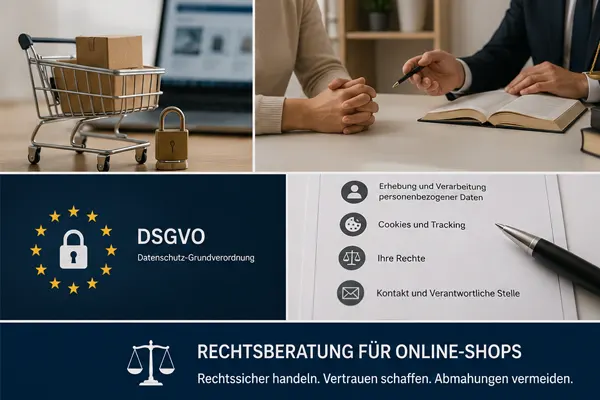
The General Data Protection Regulation (GDPR) requires companies to inform data subjects in detail about which personal data is collected, processed, and stored. This obligation applies regardless of whether a large online retailer or a small niche shop is operated.
A privacy policy for an online store or website must be easily accessible and understandable for users at all times. It provides information about:
- which data is collected,
- the purpose of data processing,
- the legal basis for processing,
- how long data is stored,
- which third-party service providers receive data,
- and what rights customers and users have.
If this information is missing or incomplete, it may constitute a violation of the GDPR.
What Data Does an Online Store Process?
Modern online stores process far more data than many operators assume. Even when a website is simply accessed, technical information is processed. During the checkout process, additional personal data is collected.
Typical data processing activities include:
Website Visit
When visiting an online store, the following data is commonly processed:
- IP address
- Browser type
- Operating system
- Date and time of access
- Referrer URL
- Device information
This data is often stored in server log files and is used for technical functionality and website security.
Account / Orders
When a customer creates an account or places an order, the following data is typically processed:
- First and last name
- Address
- Email address
- Phone number
- Payment information
- Order history
This data is required to process purchase contracts and comply with legal retention obligations.
Payment Processing
Many online stores use external payment service providers such as PayPal, Klarna, Stripe, or credit card providers.
In this context, personal data is transmitted to third parties. This data transfer must be transparently explained in the privacy policy.
Newsletter / Marketing
When email marketing is used, the following data is typically processed:
- Email addresses
- Open rates
- Click behavior
- User profiles
Special data protection requirements apply here, particularly regarding consent and the right to withdraw consent.
Cookies, Tracking and Analytics Tools
A particularly common area of concern in e-commerce relates to cookies and tracking technologies. Many online store operators use tools such as:
- Google Analytics, Google Ads Conversion Tracking, Google Tag Manager
- Meta Pixel
- Microsoft Advertising
- Hotjar
- Matomo
These tools often collect user data for marketing or analytics purposes. In many cases, valid consent via a consent management system is required prior to their use. A privacy policy must clearly explain:
- which tracking technologies are used,
- which data is processed,
- how long the data is stored,
- and what opt-out options are available.
Common Mistakes in Privacy Policies
In legal practice, the same recurring issues appear again and again.
Outdated Template Texts
Many online store operators use free privacy policy templates from the internet. These often do not reflect current case law or the specific technical setup of the store.
Undisclosed Third-Party Providers
External services are often used without being mentioned in the privacy policy. Particularly problematic are:
- Payment service providers
- Analytics tools
- Marketing services
- Social media plugins
- Cloud services
Missing Cookie Information
Cookie banners and privacy policies must be aligned. If tracking cookies are used without corresponding information in the privacy policy, legal risks may arise.
Incomplete Data Subject Rights
The GDPR requires comprehensive information about users’ rights, such as:
- Right of access
- Right to rectification
- Right to erasure
- Restriction of processing
- Data portability
- Right to object
This information must be presented in a complete and understandable way.
Can You Be Warned or Sued for an Incorrect Privacy Policy?
The question of whether data protection violations are subject to cease-and-desist claims has been discussed in courts for years. Regardless of this debate, significant risks remain.
fines, reputational damage, and claims for damages by affected individuals. For online retailers in particular, professional legal review is often significantly less costly than defending against later data protection claims.
Why Individual Legal Advice Is Advisable
Data protection in e-commerce is constantly evolving. New court decisions, technical developments, and legislative changes mean that privacy policies must be regularly reviewed and updated.
A privacy policy drafted by a lawyer has the advantage of being tailored to the specific circumstances of your online store. All integrated services are analyzed and assessed from a legal perspective.
Lawyer for Online Store Privacy Policies in Munich
Online store operators face numerous data protection challenges. A professional and up-to-date privacy policy is a key component of legally securing your business.
As a lawyer in Munich, I advise online retailers, e-commerce businesses, and operators of digital platforms on all matters relating to GDPR, data protection, and legally compliant online trading. From drafting individualized privacy policies to reviewing existing shop systems and providing comprehensive data protection compliance, you receive practical and legally sound support for your online store.
If you want to minimize legal risks, strengthen customer trust, and avoid warnings, you should have your online store’s privacy policy regularly reviewed by a specialized lawyer.